Research & Articles on Ketamine-Assisted Psychotherapy | Intrinsic Pathways

Research & Articles

Integration Psychotherapy

Integration as a Vital Part of the Journey

A vital component of the journey is the integration sessions you will have with your designated psychologist to help you process your experiences. This occurs within 72 hours of the infusion, but not on the same day.

The psychologist will use a combination of psychotherapy and cognitive-behavioural therapy or dialectical behavioural therapy techniques to assist in maximising the positive benefit of this heightened neuroplastic period. This assists in imprinting these learned tools to support you in the long run, and for as long as possible.

Research / Articles

Evidence Supporting Ketamine-Assisted Therapy

Ketamine-Assisted Therapy

Therapy combined with ketamine treatment
  • 2022 – Combining ACT therapy with ketamine.
    Mathai, D. S., Mora, V., & Garcia-Romeu, A. (2022). Toward synergies of ketamine and psychotherapy. Frontiers in Psychology, 1203.
  • 2022 – Systematic narrative review of ketamine-assisted psychotherapy.
    Drozdz, S. J., Goel, A., McGarr, M. W., Katz, J., Ritvo, P., Mattina, G. F., … & Ladha, K. S. (2022). Ketamine assisted psychotherapy: a systematic narrative review of the literature. Journal of Pain Research, 15, 1691.
  • 2022 – Therapy augments effects of ketamine for alcohol use disorder.
    Grabski, M., McAndrew, A., Lawn, W., Marsh, B., Raymen, L., Stevens, T., … & Morgan, C. J. A. (2022). Adjunctive ketamine with relapse prevention-based psychological therapy in the treatment of alcohol use disorder. The American Journal of Psychiatry.
  • 2022 – Optimizing ketamine treatment with trauma-informed psychotherapy.
    Muscat, S. A., Hartelius, G., Crouch, C. R., & Morin, K. W. (2022). Optimized clinical strategies for treatment-resistant depression: integrating ketamine protocols with trauma- and attachment-informed psychotherapy. Psych, 4(1), 119–141.
  • 2021 – Therapy enhances durability of treatment effect.
    Wilkinson, S. T., et al. (2021). Cognitive behavioral therapy to sustain the antidepressant effects of ketamine in treatment-resistant depression: a randomized clinical trial. Psychotherapy and Psychosomatics, 90(5), 318–327.
  • 2019 – Mindfulness-based therapy with ketamine for cocaine dependence.
    Dakwar, E., et al. (2019). A single ketamine infusion combined with mindfulness-based behavioral modification to treat cocaine dependence: a randomized clinical trial. American Journal of Psychiatry.

Ketamine and Addiction

Substance use, OCD and related conditions
  • 2022 – Systematic review of 83 trials.
    Walsh, Z., et al. (2022). Ketamine for the treatment of mental health and substance use disorders: comprehensive systematic review. BJPsych Open, 8(1).
  • 2021 – Alcohol use disorder.
    Worrell, S. D., & Gould, T. J. (2021). Therapeutic potential of ketamine for alcohol use disorder. Neuroscience & Biobehavioral Reviews.
  • 2021 – Addiction, OCD and eating disorders.
    Martinotti, G., et al. (2021). Therapeutic potentials of ketamine in obsessive–compulsive disorder (OCD), substance use disorders (SUD) and eating disorders (ED): a review of the current literature. Brain Sciences, 11(7), 856.
  • 2021 – Cannabis use disorder.
    Azhari, N., et al. (2021). Ketamine-facilitated behavioral treatment for cannabis use disorder: a proof of concept study. The American Journal of Drug and Alcohol Abuse, 47(1), 92–97.
  • 2019 – Cocaine dependence (randomized clinical trial).
    Dakwar, E., et al. (2019). A single ketamine infusion combined with mindfulness-based behavioral modification to treat cocaine dependence: a randomized clinical trial. American Journal of Psychiatry, 176(11), 923–930.
  • 2017 – Cocaine self-administration disrupted by ketamine.
    Dakwar, E., et al. (2017). Cocaine self-administration disrupted by the N-methyl-D-aspartate receptor antagonist ketamine: a randomized, crossover trial. Molecular Psychiatry, 22(1), 76–81.
  • 2018 – Systematic review of ketamine for substance use disorders.
    Jones, J. L., et al. (2018). Efficacy of ketamine in the treatment of substance use disorders: a systematic review. Frontiers in Psychiatry, 9, 277.

Ketamine and Depression

Major depressive disorder and treatment-resistant depression
  • 2021 – Narrative review of ketamine for depression.
    Jelen, L. A., & Stone, J. M. (2021). Ketamine for depression. International Review of Psychiatry, 33(3), 207–228.
  • 2021 – International expert opinion on treatment-resistant depression.
    McIntyre, R. S., et al. (2021). Synthesizing the evidence for ketamine in treatment-resistant depression: an international expert opinion on the available evidence and implementation. American Journal of Psychiatry, 178(5), 383–399.
  • 2022 – Comprehensive systematic review of 83 trials.
    Walsh, Z., et al. (2022). Ketamine for the treatment of mental health and substance use disorders: comprehensive systematic review. BJPsych Open, 8(1).
  • 2021 – Systematic review and meta-analysis.
    Bahji, A., Vazquez, G. H., & Zarate, C. A. Jr. (2021). Comparative efficacy of racemic ketamine for depression: a systematic review and meta-analysis. Journal of Affective Disorders, 278, 542–555.
  • 2019 – Paradigm shift review.
    Krystal, J. H., et al. (2019). Ketamine: a paradigm shift for depression research and treatment. Neuron, 101(5), 774–778.
  • 2017 – APA consensus statement.
    Sanacora, G., et al. (2017). A consensus statement on the use of ketamine in the treatment of mood disorders. JAMA Psychiatry, 74(4), 399–405.

Clinical Trials & Safety

Mechanisms, safety and ethics
  • 2022 – Systematic review of 83 trials.
    Walsh, Z., et al. (2022). Ketamine for the treatment of mental health and substance use disorders: comprehensive systematic review. BJPsych Open, 8(1).
  • 2021 – Review of neurobiological mechanisms.
    Kohtala, S. (2021). Ketamine — 50 years in use: from anesthesia to rapid antidepressant effects and neurobiological mechanisms. Pharmacological Reports.
  • 2020 – Safety review of repeated administration (6 630 patients).
    Feifel, D., Dadiomov, D., & Lee, K. C. (2020). Safety of repeated administration of parenteral ketamine for depression. Pharmaceuticals, 13(7), 151.
  • 2018 – Blood pressure safety review (684 infusions).
    Riva-Posse, P., et al. (2018). Blood pressure safety of subanesthetic ketamine for depression: a report on 684 infusions. Journal of Affective Disorders, 236, 291–297.
  • 2017 – Ethics and safety considerations.
    Singh, I., Morgan, C., Curran, V., Nutt, D., Schlag, A., & McShane, R. (2017). Ketamine treatment for depression: opportunities for clinical innovation and ethical foresight. The Lancet Psychiatry, 4(5), 419–426.
How Ketamine-Assisted Therapy Works

Neuroplasticity, BDNF and Changing Patterns

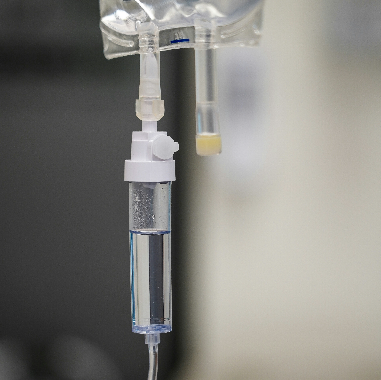
The psychedelic used by Intrinsic Pathways is a well-known anaesthetic agent, given intravenously at low dose. It primarily works by blocking NMDA receptors in the brain, which helps balance two essential neurotransmitters: glutamate and GABA. Glutamate acts as the brain's “accelerator”, supporting motivation, learning and memory, while GABA serves as the “brake pedal”, reducing nervous system excitability and promoting calmness.

The increase in glutamate during the infusion triggers the release of Brain-Derived Neurotrophic Factor (BDNF), a protein often compared to “fertilizer for the brain”. BDNF promotes the growth of new neural pathways (neurogenesis) and enhances connectivity between existing pathways (synaptogenesis).

Neuroscience suggests that conditions such as depression, anxiety, addiction, PTSD, and OCD may be linked to reduced neural density, connectivity and communication. This can contribute to low mood, excessive worry and entrenched habits. Through neurogenesis and synaptogenesis, new brain regions are activated and interconnected, allowing for profound shifts in self-perception and reality.

These shifts can enable the processing of trauma, resolution of inner conflict, release of suppressed emotions and transformation of core beliefs and behaviours. Ketamine-assisted therapy combines psychedelic medicine with psychotherapy, enhancing and sustaining the benefits of the psychedelic experience.

A useful analogy is to compare the brain to a mound of clay. Traditional therapies slowly chip away at the clay over time, while ketamine-assisted therapy “heats” the clay and adds “drops of water”, making it more malleable and open to reshaping in a short period. Under the right conditions, psychedelic-assisted therapy has been likened to experiencing years of therapy in just a few hours. The psychotherapy acts as “the hands that shape the clay”, helping you use this window of neuroplasticity to move towards your goals and desired outcomes.

Want to learn more about our protocols?
Intrinsic Pathways wellness interior - Instagram image 1
Intrinsic Pathways therapy environment - Instagram image 2
Intrinsic Pathways calming space - Instagram image 3
Intrinsic Pathways clinic detail - Instagram image 4
Intrinsic Pathways lifestyle image - Instagram image 5